
How Digital Tools Are Changing the Inner Life of Museums
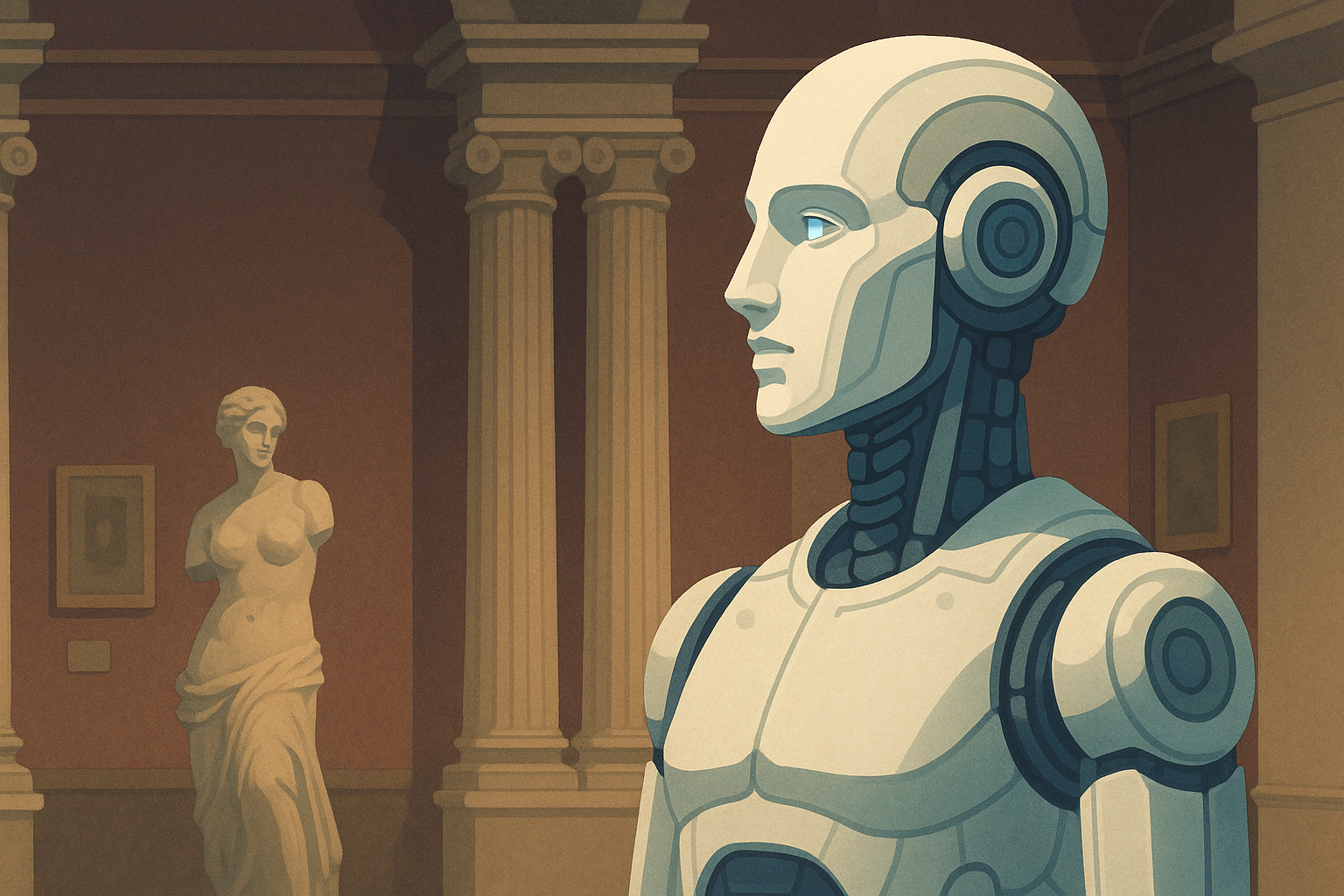
Museums have always carried with them a peculiar paradox. They are places built to preserve the past, yet they must constantly reinvent themselves to remain alive in the present. To many visitors the museum is something almost sacred: a quiet hall of contemplation where artefacts are displayed with a certain solemn reverence. Yet beneath this romantic image lies a more prosaic reality. Museums are not only cultural institutions; they are service providers operating within a modern environment of expectations, competition, and technological change.¹
In recent decades that environment has shifted dramatically. Digital technology has begun to reshape the relationship between visitor and exhibition in ways that would have been unimaginable only a generation ago. Where once the museum visit was primarily a visual encounter (silent admiration before glass cases and gallery walls) it has increasingly become interactive, participatory, and deeply personal. Digital platforms, virtual environments, and social media have not merely enhanced the museum experience; they have begun to redefine it altogether.²
This transformation raises a fascinating question: do digital tools merely decorate the museum with novelty, or do they change the inner life of the museum and its visitors themselves?
From Quiet Observation to Living Experience
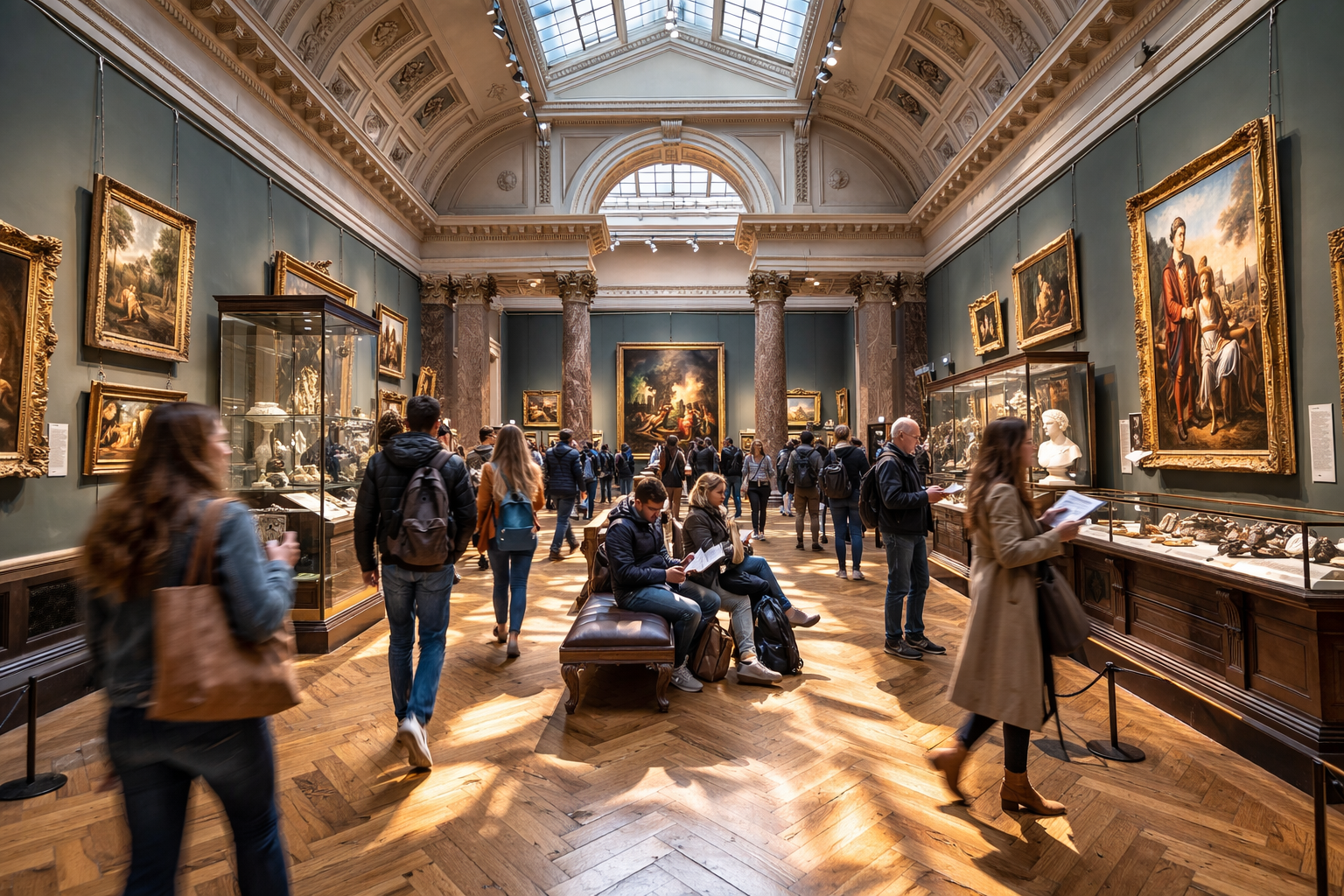
Traditionally, museums functioned as guardians of interpretation. Objects were presented to the public as authoritative symbols of history or culture, and the visitor’s role was largely passive. One entered the gallery, looked at the artefact, and absorbed the curator’s narrative.
Yet scholarship in museum studies has gradually challenged this model. George Hein famously argued that museum objects should be seen not merely as static displays but as 'experience-generating sites.'³ The meaning of an artefact does not exist solely in the object itself but emerges through the interaction between object and viewer.
This insight has profound implications. If meaning is created through interaction, then the museum must cultivate participation rather than passive observation. Visitors must not simply look at exhibits; they must engage with them, explore them, and even play with them.
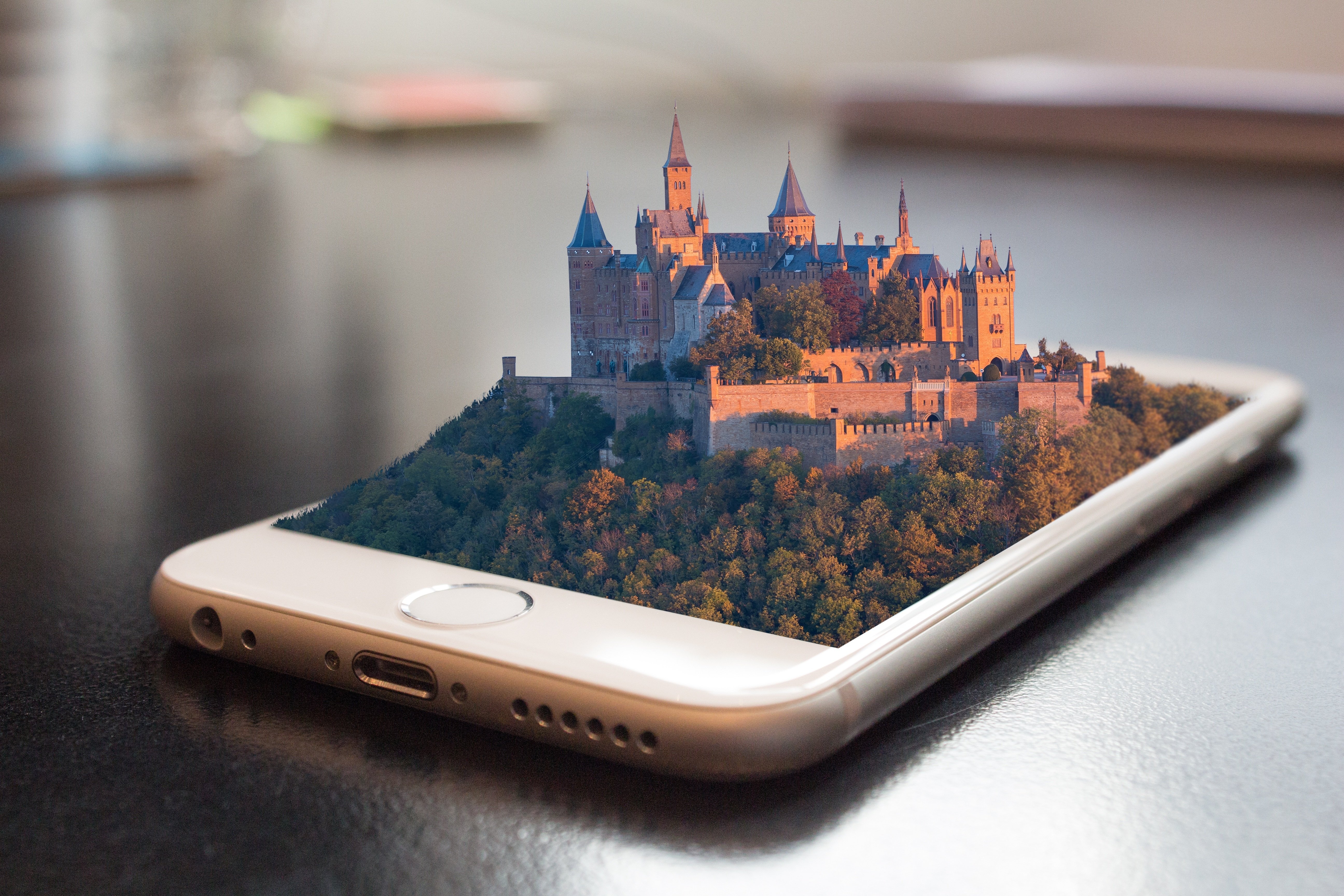
Digital technology has accelerated precisely this transformation. Interactive displays, augmented reality applications, virtual tours, and online communities allow visitors to approach exhibits not as distant relics but as gateways into immersive experiences. In effect, the museum becomes less like a library of objects and more like a stage upon which personal encounters with history are performed.⁴
But this raises another challenge. If visitors begin to interpret exhibits themselves through digital interaction, the museum’s traditional authority as the sole interpreter of culture may be subtly weakened. The institution must therefore learn to balance guidance with participation, a delicate task that lies at the heart of modern museum practice.
Museums as Service Institutions
It is tempting to imagine museums as purely intellectual or cultural enterprises. In reality they operate within economic and social systems much like any other service organisation. Museums provide experiences, and those experiences must satisfy visitors.
The evaluation of such services is inherently complex. In the world of physical goods, satisfaction can be measured through price, durability, or functionality. In the world of services, satisfaction emerges from the comparison between expectations and experience.⁵ Visitors arrive with certain expectations about the museum; they leave either satisfied or disappointed depending on how well the experience aligns with those expectations.
Moreover, satisfaction in cultural institutions does not occur only at the end of the experience. It evolves throughout the entire visit: the clarity of information, the accessibility of exhibits, the atmosphere of the gallery, and the opportunities for engagement all shape the visitor’s perception.⁶
In this sense, museums must think not only about objects but about experiences, experiences that combine education, entertainment, and emotional engagement.
The Rise of the Experience Economy
At the close of the twentieth century, Joseph Pine and James Gilmore introduced the influential concept of the 'experience economy.' According to their theory, organisations increasingly compete not merely through products or services but through memorable experiences.⁷
Museums fit perfectly into this framework. An artefact alone is not enough; the visit must become something emotionally and intellectually memorable.
Experiences, Pine and Gilmore argued, are fundamentally personal. They exist not in the exhibit but in the mind of the visitor. Two people may stand before the same painting and leave with entirely different impressions, because each brings a different mood, background, and set of expectations.
Digital technologies amplify this personal dimension. A visitor using augmented reality to explore an artefact or contributing content to an online museum platform becomes part of the interpretive process itself. The museum experience ceases to be a one-way transmission of knowledge and becomes instead a collaborative act of meaning-making.
Digital Tools and the Reimagined Museum
What exactly do these digital tools look like in practice? Museums today employ a wide array of technological instruments. Among them are social networks, blogs, wikis, virtual reality systems, mixed-reality interfaces, and user-generated content platforms.⁸
These tools serve several purposes simultaneously. They facilitate learning, encourage social interaction, and create new ways for visitors to engage with collections. Augmented reality applications, for example, allow visitors to view additional layers of information over an artwork through tablets or smartphones.⁹
Similarly, interactive digital displays invite visitors to explore artefacts creatively. One example described in museum research involves touch-screen systems that allow visitors to project background images or reinterpret artworks through digital manipulation. Such tools blur the line between observer and participant.
Visitors themselves increasingly contribute to the museum ecosystem through blogs, forums, tagging systems, and uploaded media. Photographs shared on social platforms can take on lives of their own, circulating independently of the original gallery space. In this sense the museum extends far beyond its walls into a digital landscape where cultural artefacts continue to generate new meanings.
A Study of Visitors and Digital Engagement
To better understand how digital tools influence museum experiences, researchers conducted a study involving visitors to four major museums in Bucharest: the 'Grigore Antipa' National Museum of Natural History, the National Village Museum, the National Museum of Art of Romania, and the Bucharest Municipality Museum.¹⁰
A total of 341 visitors participated in the research by completing questionnaires after leaving the museum. The demographic composition was diverse: 59% of respondents were from Bucharest, 29% from other parts of Romania, and 11% were foreign visitors, while 62% held higher education degrees.¹¹
The results reveal several intriguing insights into the digital habits of museum visitors.
The Museum Website as the Gateway
One of the most striking findings concerns the role of museum websites. When visitors were asked how they obtained information before visiting the museum, 36.6% reported using the museum’s website, making it the most common source of information. Recommendations from friends followed closely at 32.2%.¹²
This suggests that the digital front door of the museum, the website, has become a crucial gateway to physical visitation. People increasingly decide whether to visit a museum based on the information they encounter online.
The implication is simple but profound: a poorly designed website may discourage potential visitors before they ever reach the gallery.
Digital Tools Before, During, and After the Visit
Visitors do not abandon digital technology once they enter the museum. On the contrary, they continue to use it throughout the entire experience.
Before visiting, many respondents reported consulting wikis, social media platforms, videos, and virtual tours. During the visit these tools remained important, and after the visit they continued to shape engagement through online discussion and content sharing.¹³
This pattern reveals that the museum experience is no longer confined to the moment of physical attendance. It begins before the visit and continues long afterward in digital spaces.
What Visitors Actually Prefer
Interestingly, the research also reveals that technology does not replace traditional forms of engagement. When asked which activities attracted their attention most during the visit, the overwhelming favourite was direct interaction with exhibits, chosen as the first preference by 250 respondents.¹⁴
Explanations provided by human guides ranked second, followed by audio explanations. Digital entertainment such as computer games and video games ranked significantly lower.
This result offers an important lesson. Technology enhances the museum experience but does not substitute for the fundamental human desire to encounter authentic objects and stories. Visitors still want to stand before the artefact itself.
Why People Visit Museums
Visitors were also asked about their motivations for visiting museums. The results show that education and entertainment coexist rather than compete.
For many respondents, visiting a museum was an opportunity to improve their knowledge, to better understand the world, and to spend quality leisure time.¹⁵
These findings challenge the long-standing debate about whether museums should prioritise education or entertainment. In practice visitors expect both simultaneously. They want to learn, but they also want the learning to be engaging and enjoyable.
Passive Spectators or Active Participants?
One might assume that digital technology automatically transforms visitors into active participants. The reality is more nuanced.
When respondents were asked to describe their own behaviour, 47.1% considered themselves active participants, while 52.4% described themselves as passive observers.¹⁶
In other words, the transition from passive to active engagement is still incomplete. Technology may provide the tools for participation, but it does not guarantee that visitors will use them.
Interestingly, certain conditions encourage more active behaviour. Visitors who accessed the museum website beforehand tended to perceive themselves as more active participants during the visit. Similarly, visitors attending with friends were more likely to behave actively than those visiting alone.¹⁷
These subtle social factors remind us that human interaction remains as important as digital technology in shaping the museum experience.
Satisfaction and the Desire to Return
Despite these complexities, visitor satisfaction remained remarkably high. Across the four museums studied, the average satisfaction score reached 8.92 out of 10, indicating a generally positive experience.¹⁸
What drives this satisfaction? The research suggests that the most influential factor is the overall experience of the visit itself, followed by the satisfaction derived from direct interaction with exhibits.¹⁹
These experiences have tangible consequences. After their visit, 251 respondents said they would recommend the museum to friends or colleagues, while others expressed interest in attending future events or activities organised by the museum.²⁰
In short, memorable experiences lead to loyalty, and loyalty leads to advocacy.
The Museum of the Future
If the museum once resembled a quiet temple of contemplation, it is increasingly becoming something more dynamic: a cultural platform for interaction, dialogue, and exploration.
Digital technologies offer extraordinary opportunities for museums to expand their reach. Online ticketing systems can help institutions better understand visitor behaviour. Augmented reality can reveal hidden layers of information within artefacts. Multimedia installations can immerse visitors in historical narratives.
Yet technology alone cannot create meaningful experiences. The essence of the museum remains the encounter between human curiosity and the material traces of history. Digital tools succeed only when they deepen that encounter rather than distracting from it.
The museum of the future, therefore, will not be defined by screens or gadgets but by experiences, experiences that combine intellectual discovery with imaginative engagement.
In this sense, the digital transformation of museums is not a departure from their traditional mission but its continuation. Museums have always been places where people seek to understand the world through the objects of the past. Technology simply provides new ways to pursue that ancient curiosity.
And perhaps that is the most hopeful lesson of all. The museum is not becoming obsolete in the digital age. On the contrary, it may be discovering a new vitality, one in which the past speaks to the present through tools that make its voice clearer than ever before.
Footnotes
Ibid.
George Hein, Learning in the Museum (1998).
Coman et al., “Digital Tools.”
Zeithaml et al., consumer expectations of service.
Gabbott and Hogg, Consumers and Services (1998).
Pine and Gilmore, “Welcome to the Experience Economy.”
Coman et al., “Digital Tools.”
Lohr, “Museums Morph Digitally.”
Coman et al., research methodology.
Ibid.
Survey results, Table 1.
Survey results, Table 2.
Survey results, Table 3.
Survey results, Table 5.
Survey results, Table 6.
Survey results, Tables 7–8.
Visitor satisfaction statistics.
Survey results, Table 9.
Survey results, Table 11.